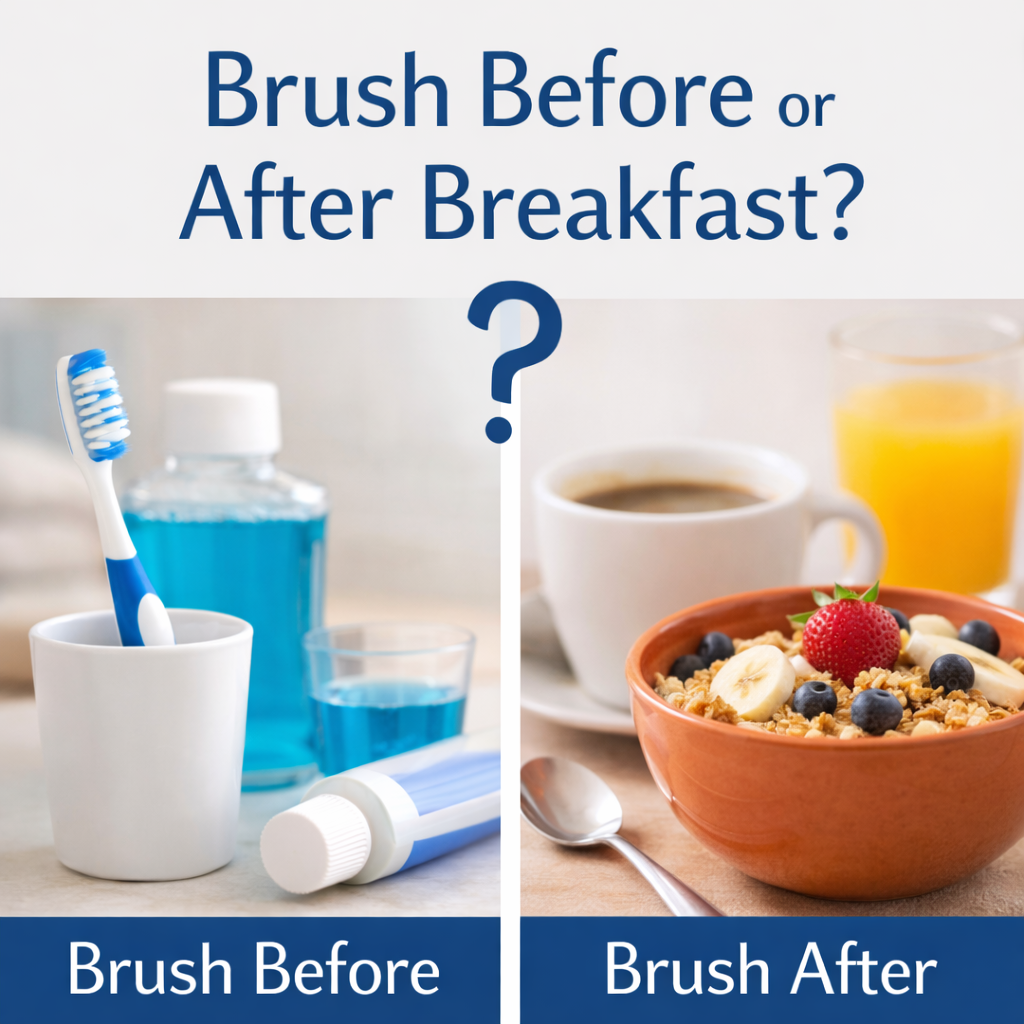
Most people brush their teeth twice a day, in the morning and in the evening. However, when it comes to morning brushing, one question comes up again and again: “Should I brush before breakfast or after it?”
Brushing your teeth in the morning is more than just having fresh breath before school or work. The timing of your brushing can affect your enamel and, plaque grwoth. Understanding what happens in your mouth overnight and after you eat can help you choose a routine that supports long-term dental health.
What Happens to Your Mouth Overnight
While you sleep, saliva flow slows down and bacteria begin to build up on your teeth and tongue. That makes morning breath more common, and it also gives plaque-forming bacteria a head start on your day (Healthline, 2024).
Brushing first thing in the morning removes that overnight bacterial buildup before you eat or drink anything. It also applies a layer of fluoride from toothpaste that helps strengthen enamel against acids later, like those in orange juice, coffee, or other breakfast foods (ADA news via Healthline, 2024).
The Case for Brushing Before Breakfast
Many dental professionals recommend brushing before breakfast because it:
-
Removes plaque and bacteria that accumulated overnight
- Places protective fluoride on your teeth before food and drink arrive
-
Whitens your breath before eating
This can be especially helpful if your breakfast includes acidic items like fruit juice or coffee. Acid weakens the enamel temporarily, and brushing immediately afterward might wear the softened enamel more (Mayo Clinic, 2024).
In other words, if you brush after eating right away, you may actually be brushing enamel that is softer than it should be. Waiting gives your saliva time to neutralize acids and help your enamel harden again.
Brushing After Breakfast
Brushing after breakfast can also make sense, especially if you are removing food particles from your teeth. The key is timing.
If you choose to brush after eating, it’s generally advisable to wait at least 30 minutes. This delay lets your saliva naturally buffer acids and restore a more neutral environment before your toothbrush contacts your enamel (ADA news via Healthline, 2024).
Delaying brushing after acidic foods, like orange juice or citrus fruits, reduces the risk of hastening enamel wear. Your saliva is doing more than just washing away food; it’s helping minerals redeposit into your tooth surface (Mayo Clinic, 2024).
What the Evidence Says
There isn’t a definitive “best time” backed by strong scientific trials, but the general expert consensus leans slightly toward brushing before breakfast for most people. This removes overnight bacterial buildup and adds fluoride protection ahead of eating (PMC, 2024).
If you prefer brushing after breakfast, the evidence suggests waiting about half an hour to allow saliva to do its natural buffering. Either way, brushing twice a day and using fluoride toothpaste remains far more important than the exact order of brushing relative to breakfast (ADA news via Healthline, 2024).
So What Should You Do?
-
Brush before breakfast if you want to start your day with clean teeth free of overnight plaque and a fluoride coating before food arrives.
-
If you prefer to brush after eating, wait at least 30 minutes, especially if your breakfast was acidic, to protect enamel.
-
Either choice is better than skipping your morning brushing entirely. Consistent twice-daily brushing with fluoride toothpaste and good technique is the foundation of oral health.
A Simple Rule That Works
Your morning brushing routine doesn’t need to be perfect. The goal is to:
-
Brush for two minutes
-
Use fluoride toothpaste
-
Brush twice a day
-
Wait a reasonable amount of time if you brush after eating
Making these habits part of your day protects your enamel, reduces plaque buildup, and helps set you up for a healthier smile.
If you have specific concerns, like sensitivity, enamel wear, or frequent acid exposure, don’t hesitate to ask your dentist for a routine tailored to your situation.