What to Know Before Starting Treatment:
Many adults think orthodontic treatment is something that only happens during teenage years. But modern orthodontic technology has made it much easier for adults to straighten their teeth later in life. One of the most widely used options today is Invisalign.
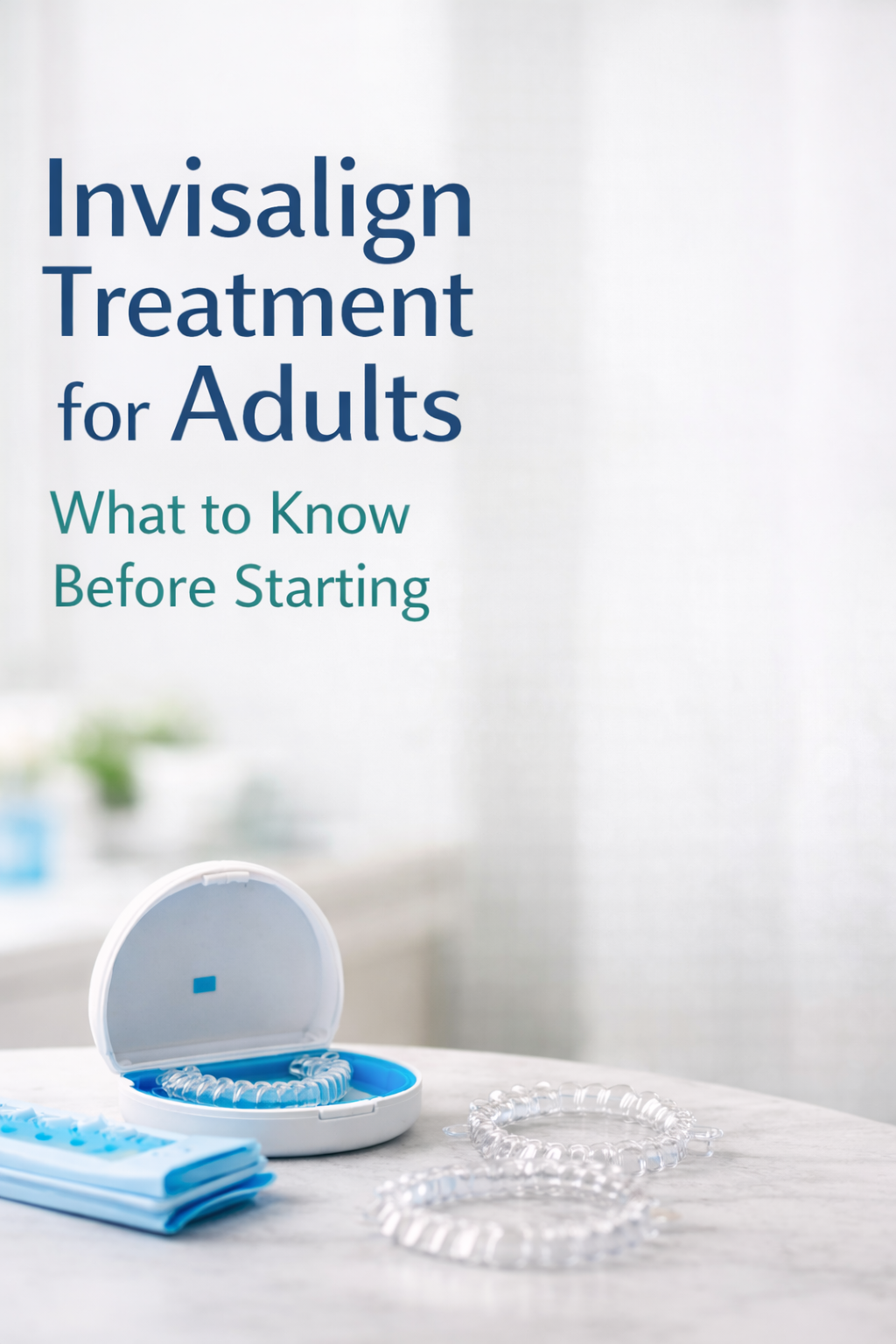
Invisalign uses a series of clear, removable aligners to gradually move teeth into better alignment. Because the aligners are transparent and removable, many adults find them easier to integrate into their daily routines compared with traditional braces.
Understanding how Invisalign works and what to expect can help you decide whether it may be a good option for improving your smile and long-term oral health.
What Invisalign Actually Does
Invisalign is a clear aligner system designed to correct certain types of orthodontic issues, including mild to moderate crowding, spacing, and some bite irregularities.
Instead of metal brackets and wires, Invisalign uses a series of custom-made plastic aligners. Each set of aligners is designed to move teeth slightly, and patients typically switch to a new set every one to two weeks as treatment progresses.
The aligners are created using digital imaging and treatment planning software that maps the gradual movement of teeth over time. According to the American Association of Orthodontists, clear aligner therapy can effectively treat many common alignment concerns when used under professional dental supervision (American Association of Orthodontists, 2023).
Why Adults Often Consider Invisalign
One of the main reasons adults choose Invisalign is its appearance. The aligners are made from clear medical-grade plastic, making them less noticeable than traditional braces.
Another advantage is that the aligners are removable. This allows patients to take them out for meals and for brushing and flossing, which can make maintaining oral hygiene easier during orthodontic treatment.
Many adults also appreciate that Invisalign generally requires fewer emergency visits related to broken wires or brackets compared with fixed braces. However, regular check-ins with a dentist remain important to monitor progress and ensure treatment stays on track.
What Invisalign Can and Cannot Fix
Invisalign can address several common orthodontic concerns, including:
-
Mild to moderate crowding
-
Small gaps between teeth
-
Certain bite alignment issues
-
Teeth that have shifted after previous orthodontic treatment
More complex orthodontic conditions may still require traditional braces or other orthodontic approaches. A dental examination and imaging are needed to determine whether Invisalign is appropriate for an individual case.
The American Dental Association notes that orthodontic treatment options vary depending on the complexity of the tooth movement required and the overall health of the gums and supporting bone (American Dental Association, 2023).
What Daily Life With Invisalign Looks Like
Successful Invisalign treatment depends on consistency. Aligners are typically worn 20 to 22 hours per day, removed only for eating, drinking anything other than water, and performing oral hygiene.
Patients usually receive several sets of aligners at a time and change them according to the treatment schedule provided by their dentist.
Because the aligners are removable, patients should brush and floss before placing them back in the mouth. This helps prevent food particles from becoming trapped between the aligner and teeth.
Why Straight Teeth Are About More Than Appearance
While many people pursue orthodontic treatment for cosmetic reasons, alignment also affects oral health.
Crowded or overlapping teeth can make plaque removal more difficult, increasing the risk of gum irritation and other hygiene problems. The American Dental Association notes that orthodontic treatment may be recommended when teeth are crowded or do not meet properly (American Dental Association, n.d.). Older clinical and microbiological studies have also found that crowded areas tend to accumulate more plaque and show more gingival inflammation than non-crowded areas (Ingervall et al., 1977; Chung et al., 2000).
Proper alignment can make daily brushing and flossing more effective, which is one reason orthodontic treatment may support long-term oral health (American Dental Association, n.d.).
When to Talk to Your Dentist About Invisalign
If you have noticed teeth shifting, crowding, or gaps that make cleaning difficult, it may be worth discussing orthodontic options with your dentist.
An examination allows your dentist to assess tooth alignment, gum health, and bite function to determine whether Invisalign may be suitable.
Every smile is different, and the best orthodontic approach depends on individual needs and goals.
Considering Invisalign in Winnipeg?
Invisalign has helped many adults straighten their teeth using a treatment approach that fits more comfortably into everyday routines. With proper planning and consistent wear, clear aligners can gradually guide teeth into healthier alignment over time.
If you’re interested in learning more about how Invisalign works, including what the treatment process involves and who may be a good candidate, you can learn more about our Invisalign treatment options here.
Orthodontic care is most effective when it begins with a clear understanding of your current oral health and your goals for your smile. Speaking with your dentist can help determine whether Invisalign or another orthodontic approach may be the right option for you.