Good oral hygiene is more than brushing alone. Flossing is essential to remove food particles and plaque between teeth and along the gum line, where toothbrush bristles don’t reach. Yet, with choices like traditional string floss and water flossers, it’s natural to wonder which option is best. Let’s dive into the pros and cons of each to help you make an informed decision for your dental routine!
Traditional String Floss
Pros:
- Superior Plaque Removal
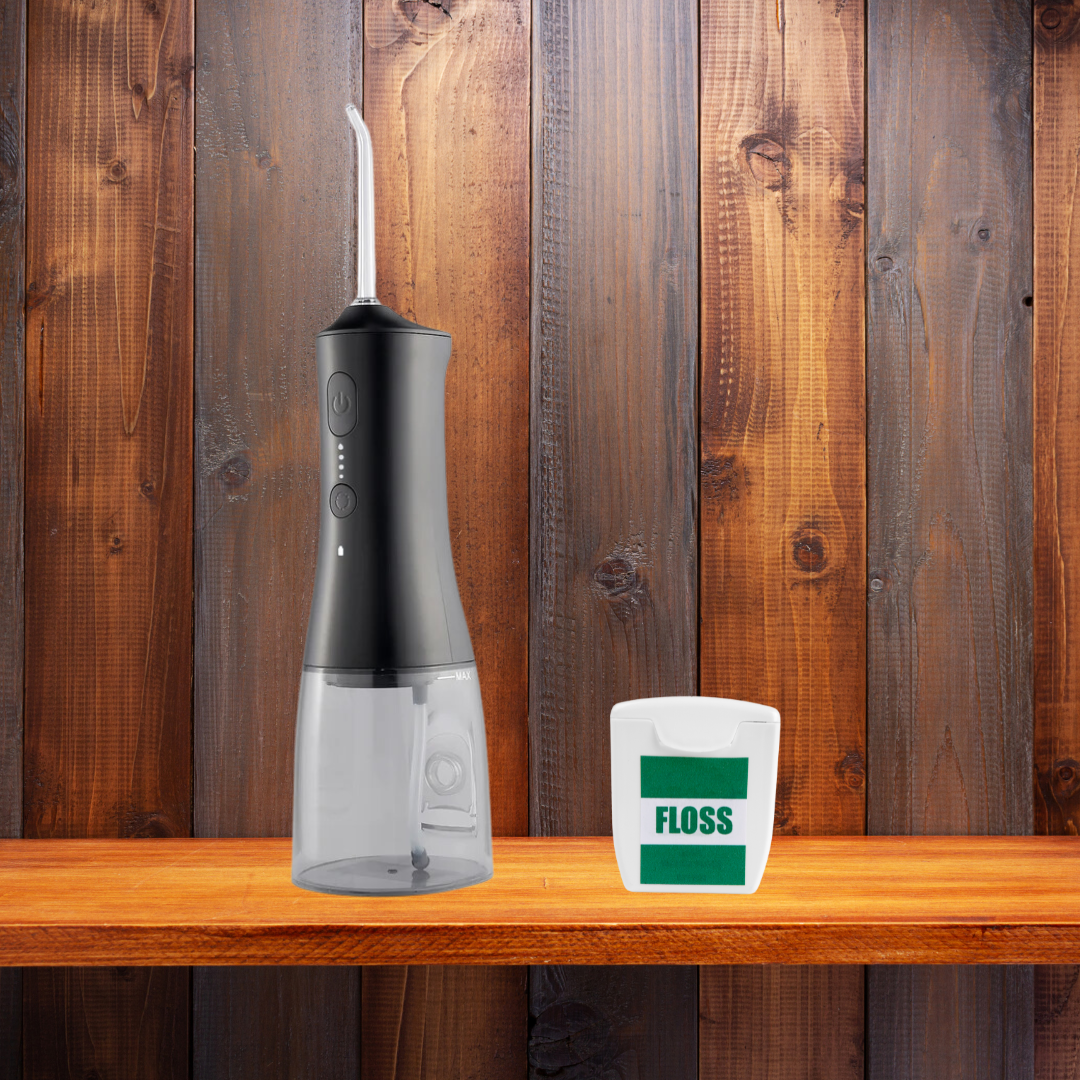
Studies show that string floss is highly effective at removing plaque between teeth, which helps prevent cavities and gum disease. By scraping along the sides of each tooth, floss can physically disrupt plaque colonies, particularly in the tight spaces where bacteria flourish. - Cost-Effective
String floss is affordable, widely available, and doesn’t require an initial investment like a water flosser. It’s perfect if you’re looking for an economical option for daily use. - Portable and Easy to Use Anywhere
Lightweight and compact, string floss can be taken anywhere—great for quick flossing after meals or on the go. - Variety of Options
String floss is available in waxed, unwaxed, flavored, and even tape versions, allowing you to select one that’s comfortable and suits your specific needs.
Cons:
- Can Be Difficult for Some Users
Traditional flossing can be tricky for people with braces, bridges, or arthritis, as it requires dexterity to reach between tight spaces. - Can Cause Minor Injury if Used Incorrectly
Incorrect flossing technique—like snapping floss too hard—can irritate gums or cause bleeding, especially in sensitive areas. - Single-Use Product
String floss is disposable, so there’s some waste involved. For those conscious of the environment, the constant disposal of used floss can feel less eco-friendly.
Water Flosser
A water flosser (also known as an oral irrigator) uses a stream of pulsating water to clean between teeth and along the gumline.
Pros:
- Gentle on Gums
The pulsating water is gentle, making water flossers ideal for individuals with sensitive gums, braces, dental implants, or crowns. They effectively clean without causing discomfort. - Easy to Use for All Ages and Dexterities
Water flossers require minimal dexterity and are generally easy for all ages to use. Simply point the flosser tip between your teeth, and the water does the work, making it a convenient option for people with arthritis or limited mobility. - Efficient for Braces and Implants
Unlike string floss, water flossers can easily clean around braces, bridges, and implants, removing debris without damaging dental work. They’re often recommended by orthodontists and dentists for patients with these specific dental needs. - Improves Gum Health
Research suggests that water flossers can reduce gingivitis and inflammation by reaching areas slightly below the gumline. The pulsating water can massage and stimulate gums, promoting blood flow and contributing to healthier gums.
Cons:
- Higher Cost
Water flossers are an investment. The devices cost significantly more upfront than string floss, and they also require access to water and electricity, limiting portability. - Bulkiness and Maintenance
Water flossers are typically larger and require regular cleaning to prevent mold or bacteria buildup. For those with limited counter space, this may be a drawback. - May Not Remove All Plaque
While water flossers effectively remove food particles, studies suggest they may not be as effective as traditional floss in scraping plaque directly off tooth surfaces, which could be a factor for those prone to plaque buildup.
Which is Better for You?
Both methods have their advantages, and often, the choice boils down to individual dental needs, budget, and personal preferences. Here’s a quick guide to help you decide:
- If you’re prone to plaque buildup and don’t have dental work like braces or implants, traditional floss may offer a more thorough cleaning.
- If you have braces, implants, sensitive gums, or struggle with traditional flossing techniques, a water flosser can provide a gentler, more accessible alternative.
- If you’re dedicated to maintaining gum health and enjoy an additional massage effect, a water flosser could add a beneficial boost to your routine.
- If budget or portability is a concern, traditional string floss is a cost-effective, accessible choice.
Conclusion
Ideally, consider a combination of both tools. Traditional floss can provide an intense plaque-fighting action, while a water flosser can offer a gentle, comprehensive clean for your gums and hard-to-reach areas. Consult with your dentist to determine which option best suits your unique dental needs, and remember—no matter the choice, consistent flossing is key to maintaining a healthy smile!