Why Dry Mouth Matters for Adults
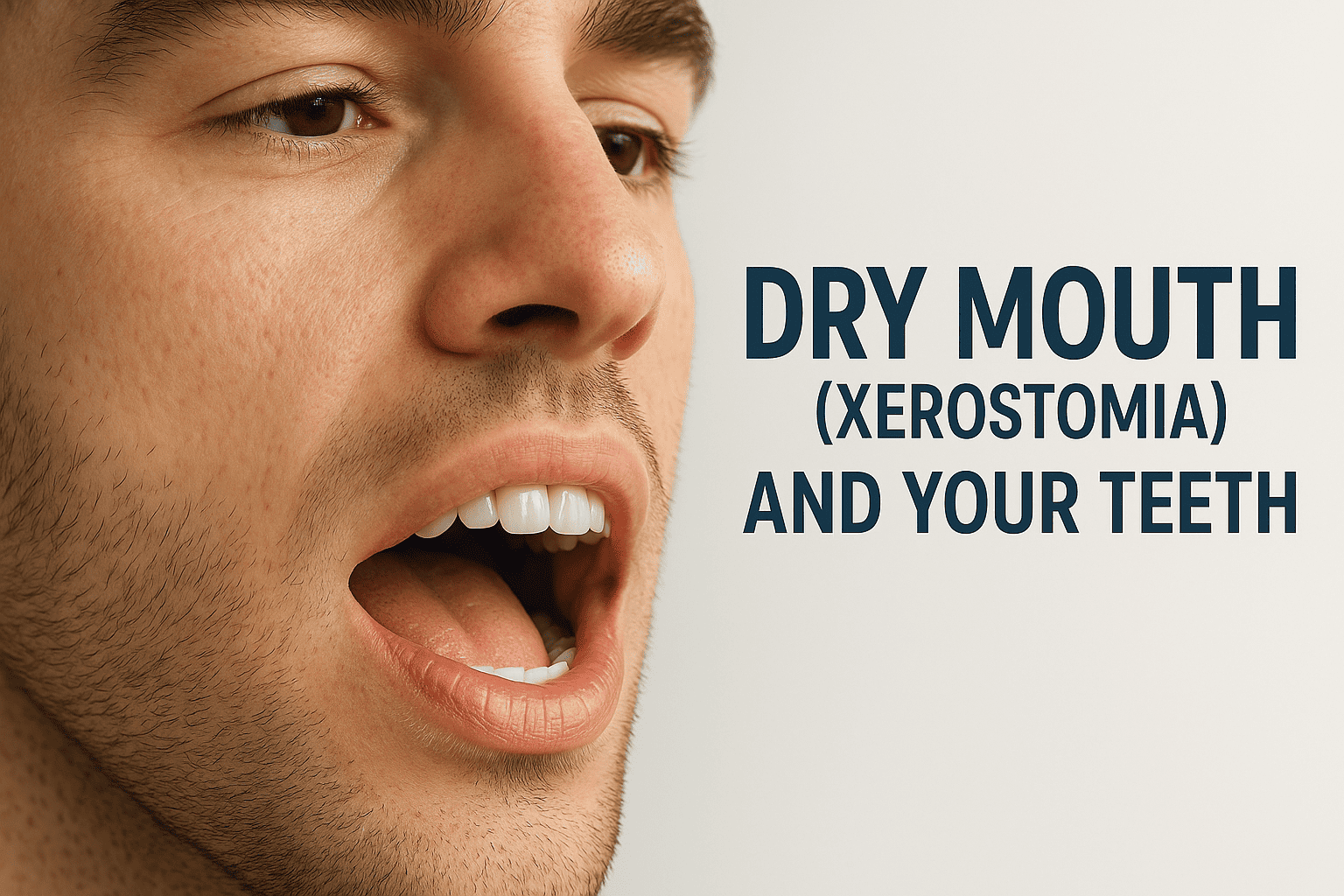
If you’ve noticed your mouth feeling sticky, your tongue feeling rough, or you wake up needing water during the night, the issue may not be hydration — it may be dry mouth. Many adults experience reduced saliva flow, especially if they take daily medications. And just like improper flossing, dry mouth affects far more than comfort. It affects the enamel, gum tissue, and oral bacteria that determine long-term dental health.
When saliva decreases, acids linger longer, plaque becomes more irritating, and early inflammation can progress quietly. For adults, understanding dry mouth is the first step in preventing the dental problems that often follow.
What Saliva Is Actually For
Dry mouth is not simply a lack of moisture. It is the loss of saliva’s protective functions — something no amount of brushing can replace.
Saliva helps neutralize acids, clear food debris, repair enamel, and keep soft tissues healthy. According to the National Institute of Dental and Craniofacial Research (NIDCR, 2023), saliva is essential for maintaining the balance of minerals and bacteria in the mouth. Without adequate saliva, plaque becomes more harmful, and enamel becomes more vulnerable.
Saliva also contains proteins and minerals that help remineralize teeth. When saliva flow decreases, the enamel loses part of its natural repair system. This makes dry mouth a risk factor for cavities, gum irritation, and chronic discomfort.
The Three Key Contributors to Dry Mouth
1. Medications and Their Oral Side Effects
The most common cause of adult dry mouth is medication. More than 500 medications list dry mouth as a known side effect, including blood pressure drugs, antidepressants, antihistamines, and sleep aids. The American Dental Association (ADA, 2023) notes that salivary glands are highly sensitive to these medications, even at low doses.
When multiple medications are taken together, the dryness often becomes more noticeable — and more persistent.
2. Medical Conditions That Reduce Saliva Flow
Conditions such as diabetes, Sjögren’s syndrome, thyroid disorders, and autoimmune diseases can reduce saliva production. Studies referenced by the Mayo Clinic (Mayo Clinic, 2023) show that systemic conditions interfere with gland function, making dryness a daily challenge for many adults.
3. Lifestyle Habits That Dry the Mouth
Smoking, vaping, alcohol use, caffeine, and mouth breathing all contribute to dryness. Even mild dehydration — common during Manitoba winters — can lower saliva flow. These habits often go unnoticed, but they significantly affect how well the mouth can protect itself.
Why Dry Mouth Problems Often Go Unnoticed
Dry mouth does not usually cause sharp pain. Most symptoms are subtle: a dry tongue, sticky saliva, difficulty swallowing, or increased thirst. Because these symptoms build slowly, many adults adapt without realizing their mouth is changing biologically.
Low saliva allows plaque to stay on surfaces longer. This plaque does not produce immediate symptoms. It creates gingival irritation that often appears only as occasional bleeding or tenderness. Over time, without intervention, this can progress into cavities, gum disease, or chronic inflammation.
Dry mouth is silent — but its effects accumulate.
What Causes Plaque Problems in a Dry Mouth
Several factors make a dry mouth more vulnerable to dental issues:
-
Food particles and bacteria are not washed away as easily.
-
Acids remain on enamel longer because saliva cannot buffer them.
-
Mineral loss is not replaced as quickly.
-
Root surfaces (more common in adults with gum recession) decay faster when dry.
-
Teeth with fillings or crowns collect plaque more easily when lubrication is reduced.
These conditions make saliva essential, not optional.
When to See a Dentist
You should schedule a dental exam if you notice any of the following:
-
Dryness that lasts more than two weeks
-
Burning or soreness on the tongue
-
Bad breath that persists
-
New cavities appearing unexpectedly
-
Cracked lips or thick, stringy saliva
-
Difficulty eating dry foods
-
White patches that may indicate a fungal infection
Early care prevents minor dryness from turning into long-term enamel or gum damage.
Whether you are experiencing mild dryness or chronic symptoms, our goal is to protect the foundation of your oral health and support your long-term comfort.
Dry mouth is manageable. With the right habits and early dental guidance, adults can reduce irritation, strengthen enamel, and keep their gums healthy — even when saliva levels are lower than ideal.
If you are noticing persistent dryness, discomfort, or cavity concerns, schedule a visit with Regent Avenue Dental in Winnipeg. Early evaluation and the right approach make a meaningful difference.