Why Proper Flossing Matters for Adults
If you’ve ever wondered why your gums still bleed, feel tender, or seem puffy despite brushing every day, the problem may be your flossing technique, not the frequency. Many adults floss, but very few floss in a way that actually removes bacteria from the places where gum disease begins. For adults, proper flossing protects more than your smile. It protects the gum tissue and bone that hold your teeth in place, and it reduces the risk of inflammation that can progress silently for years.
What Flossing Is Actually For
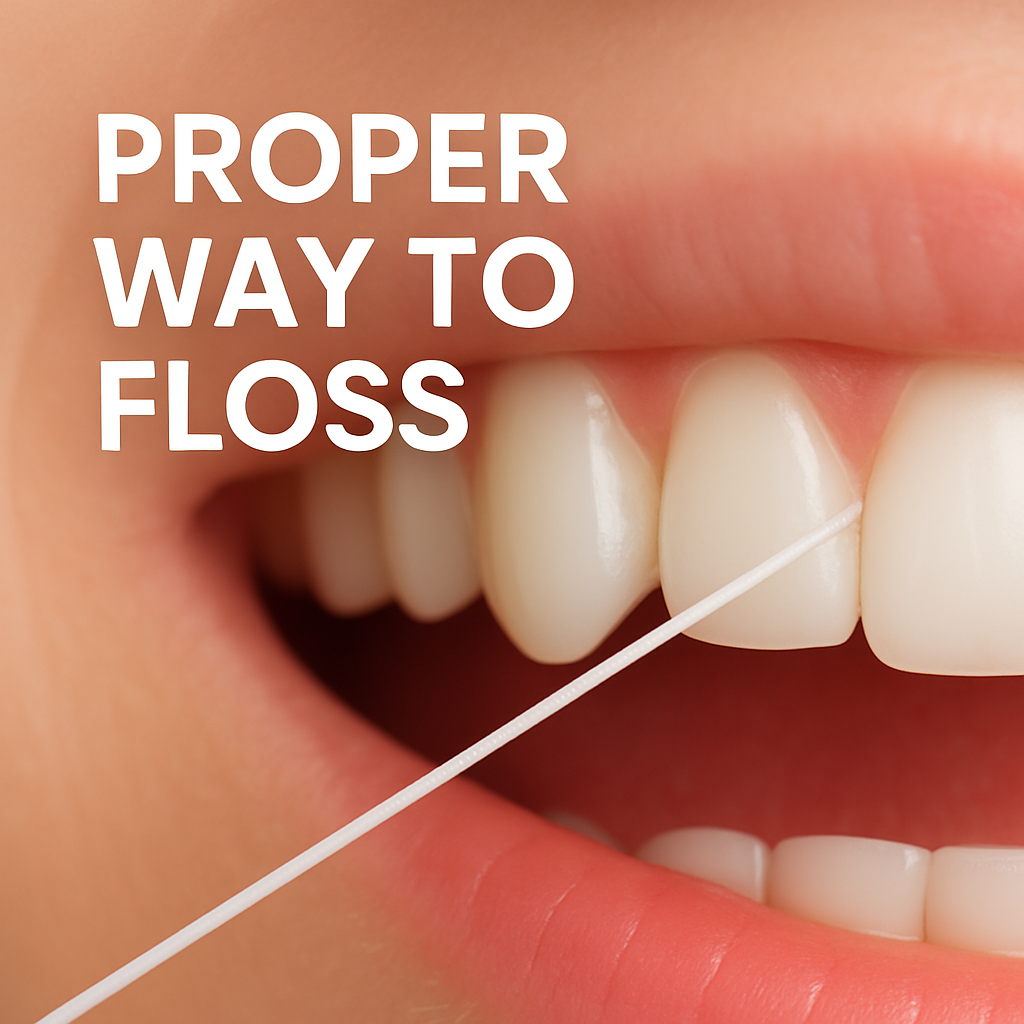
Flossing is meant to remove soft biofilm — living bacterial plaque — from between the teeth and under the gumline. This is an area toothbrush bristles cannot reach, no matter how well you brush. Biofilm is sticky and firmly attached to tooth surfaces, which means it requires deliberate, mechanical removal (American Dental Association, 2022).
When floss is simply snapped between the teeth and pulled out, most of that biofilm stays exactly where it is. Effective flossing is not about passing floss between teeth; it’s about cleaning the curved surfaces and gumline that are vulnerable to inflammation.
The Three Key Elements of Effective Flossing
1. The C-Shape: How Floss Removes Plaque
Proper flossing requires wrapping the floss around the tooth to create a C-shape. This shape allows the floss to contact the actual surface of the tooth, where biofilm forms. The floss should be gently slid under the gumline and moved vertically against the tooth surface. This is the motion that supports healthy gums and helps disrupt plaque before it hardens.
2. Using a Clean Section of Floss for Each Tooth
Floss lifts bacteria away from the tooth. Reusing the same section simply spreads those bacteria from one area to the next. To avoid this, unwind clean floss from one hand and wind the used section onto the other. Each tooth receives a fresh portion of floss so that no site is contaminated by another.
3. Bleeding Is a Sign of Inflammation
When gums bleed during flossing, the cause is usually inflammation from plaque accumulation — not injury from the flossing motion. Consistent flossing with proper technique typically reduces bleeding within one to two weeks. If bleeding persists beyond two weeks, a dental evaluation is recommended to rule out early periodontal disease.
Why Flossing Problems Often Go Unnoticed
Improper flossing does not usually cause pain. Many adults believe they are flossing effectively because the motion is familiar and quick. However, biofilm left under the gumline does not produce immediate symptoms. It builds gradually, and the earliest signs — slight tenderness or occasional bleeding — are often ignored.
Because inflammation begins silently, years can pass before noticeable gum recession, pocketing, or chronic bleeding appear. Correct flossing reduces this risk by addressing biofilm before it hardens into tartar.
What Causes Plaque Buildup Between Teeth
Several factors make interdental areas especially vulnerable:
-
The tight spaces between teeth where a toothbrush cannot reach
-
Mineral-rich saliva near the lower front teeth, increasing tartar formation
-
Inconsistent flossing habits
-
Crowded teeth or dental restorations that trap food
-
Reduced saliva flow from medications or medical conditions
These factors make proper technique essential, not optional.
When to See a Dentist
You should schedule a dental exam if you notice any of the following:
-
Bleeding that does not improve after 10–14 days of proper flossing
-
Bad breath that persists even with brushing and flossing
-
Tenderness or swelling between teeth
-
Difficulty getting floss between certain teeth
-
Hardened deposits that do not come off with flossing
Early evaluation prevents minor inflammation from progressing into periodontal disease.
How We Help at Regent Avenue Dental
At our Winnipeg clinic, we provide complete interdental health evaluations, including:
-
Checking gum health and measuring any inflammation
-
Assessing tartar buildup between teeth
-
Reviewing habits that may be contributing to bleeding or tenderness
-
Demonstrating flossing technique tailored to your specific spacing and tooth alignment
Whether you are improving your daily routine or managing early gum inflammation, our goal is to help protect your gum tissue and maintain long-term oral health.
Flossing works — but only when it is done with proper technique. The C-shape motion, clean sections of floss, and consistent daily practice are essential for removing the bacteria that cause inflammation and gum disease. For adults, these habits help protect the foundation of your oral health.
If you are noticing bleeding, tenderness, or buildup between your teeth, schedule a visit with Regent Avenue Dental in Winnipeg. Early care and correct technique make a meaningful difference.