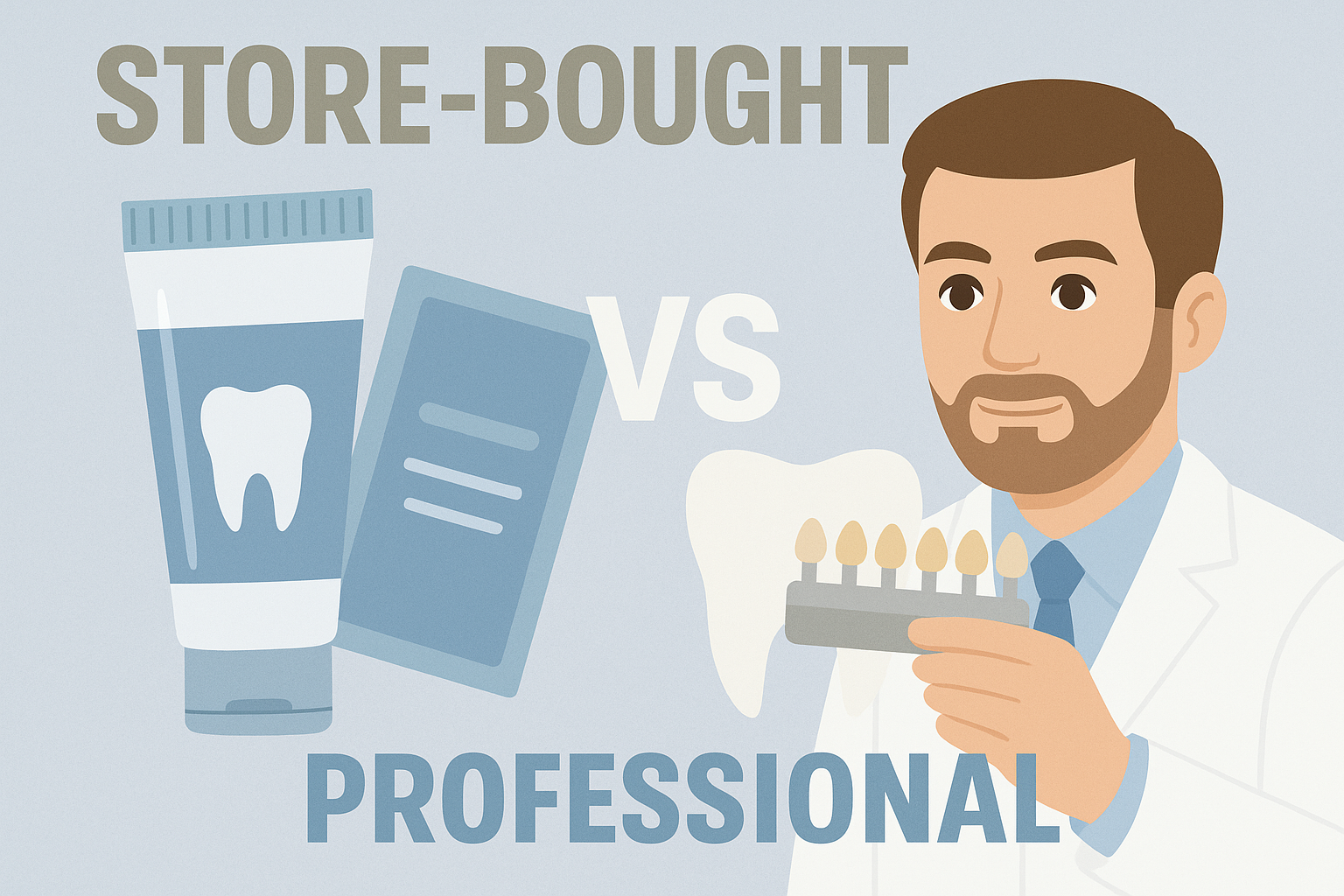
Teeth whitening is one of the most popular cosmetic dental procedures, with options ranging from over-the-counter kits bought at the drugstore to in-office treatments performed by a dentist. Each approach comes with its own safety considerations, cost factors, convenience, and results. Professional in-office treatments typically carry a higher price tag, whereas store-bought products are more budget-friendly—but beyond cost, each method has its pros and cons (American Dental Association (ADA), 2023).
Safety: How Safe Are OTC vs. Professional Whitening?
Professional dental whitening is done under expert supervision, which enhances safety. Dentists begin by examining your teeth and gums to ensure you’re a good candidate and to identify any issues like cavities or restorations before whitening (ADA, 2023). During in-office treatments, protective measures such as rubber dams or gels are used to shield your gums, and the dentist carefully controls the concentration of bleaching agents. This means any tooth sensitivity or gum irritation can be managed in real time. Over decades of use, studies have found no significant long-term health risks from dentist-supervised whitening when proper protocols are followed (Joiner, 2020).
Store-bought whitening products (like strips, gels, and whitening toothpastes) can also be safe if used as directed. The ADA awards its Seal of Acceptance to select OTC whitening toothpastes and strips, indicating they meet safety and effectiveness requirements when used properly (ADA, 2023). Problems tend to arise when whitening products are overused or misused—doing too many treatments, leaving strips on for longer than directed, or using excessive gel can irritate gums or damage enamel over time (Hooper, 2024).
Cost-Effectiveness: Which Option Fits Your Budget?
Over-the-counter products are undoubtedly cheaper upfront. Whitening toothpastes or strips usually range from about $20 to $50 per box. In contrast, professional whitening is more expensive, typically hundreds of dollars per treatment. According to GoodRx (Hooper, 2024), in-office whitening averages around $500–$1,000, while dentist-dispensed take-home kits may cost $300–$600.
If we look strictly at upfront costs, OTC methods win. However, cost-effectiveness includes weighing the results. Dentist treatments use stronger peroxide agents that can whiten several shades in one go and last longer with proper care. By contrast, OTC kits often need to be repeated more frequently, which could add up in cost over time (Joiner, 2020).
Misusing whitening products could also lead to unintended dental issues, potentially requiring restorative treatments that offset any upfront savings. Therefore, while OTC products are budget-friendly initially, professional whitening may offer more value in the long run (Müller-Heupt et al., 2023).
Convenience: Time and Ease of Use
Store-bought products are highly convenient. They’re accessible at pharmacies or online, and can be used at home without scheduling a dental visit. Strips are often worn for just 30 minutes a day over one to two weeks. Whitening toothpaste replaces regular toothpaste, requiring no extra effort.
However, these products typically require more time to see results. One study found that in-office whitening achieved in one day the same results as an OTC kit used over 16 days (Marto et al., 2022). If you’re looking for quick results—say, before a special event—in-office treatment is more efficient.
Professional whitening requires scheduling an appointment, but results are faster and more consistent. Custom trays from the dentist also offer better comfort and gel placement than generic OTC trays (Hoertdoerfer Dentistry, 2024).
Results and Effectiveness: How Do They Compare?
Professional whitening uses high concentrations of peroxide (15–40%) and can lighten teeth by up to 8 shades in one visit (Joiner, 2020). OTC products, by contrast, generally contain lower concentrations and typically whiten by 2–3 shades after weeks of use (Müller-Heupt et al., 2023).
Whitening from a dentist tends to last longer and is more even, especially when custom trays or light-accelerated techniques are used. OTC methods are better suited for minor brightening or maintenance after professional whitening (Hooper, 2024).
Final Thoughts
In conclusion, store-bought and professional teeth whitening both have a place depending on your needs. OTC methods are affordable and convenient, ideal for gradual brightening or touch-ups. Professional whitening offers faster, more dramatic, and longer-lasting results under expert supervision.
Before starting any whitening treatment, consult your dentist—especially if you have sensitive teeth, gum issues, or restorations. An informed approach ensures not just a whiter smile, but a healthier one too.